
What sea moss is, and what it isn't
Sea moss has become one of the most talked-about foods in wellness, and one of the most misunderstood. This is the guide we wish existed when we started: what it is, where it comes from, how a gel is made, and what it contains.
A sea vegetable, first
Sea moss is a red algae: an edible sea plant that grows on rocks in the tidal zone. It looks more like seaweed than moss, and it belongs to the same broad family of ocean foods that coastal communities have eaten for generations, alongside kelp and dulse. It comes in gold, purple, green and red varieties depending on the species and where it grows.
Three species are commonly sold as "sea moss": Eucheuma cottonii and Gracilaria, which grow in warm tropical water such as the Caribbean, and Chondrus crispus, or Irish moss, from the colder North Atlantic. They are closely related, with similar composition and slightly different tastes and textures. Ocean Gold is made with wild-harvested gold sea moss from the waters of St Lucia.
Wild-harvested or pool-grown?
Not all sea moss is grown in the sea. Some is farmed in brine pools on land, which produces a paler, more uniform frond quickly and cheaply. Wild-harvested sea moss grows on rocks in open water, is picked by hand and sun-dried on the shore. It tends to be more varied in colour and carries more of the ocean's mineral profile. If a brand can't tell you where its sea moss was grown, that's worth noticing.
From dried sea moss to gel
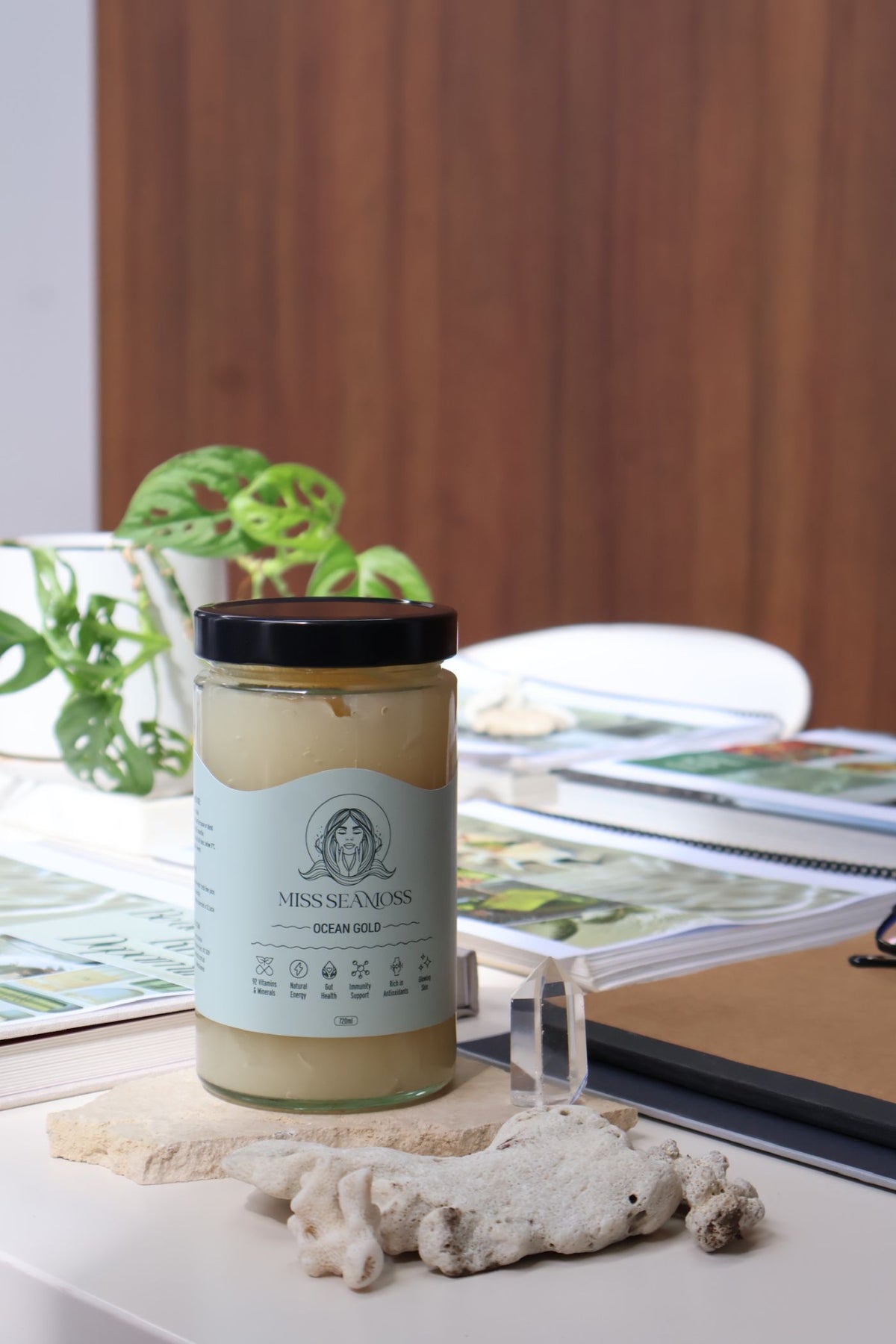
Sea moss arrives dried. To make a gel, it's rinsed thoroughly, cleaned and soaked for 24 hours before blending into our signature creamy Ocean Gold sea moss gel, the one our customers love.
What it contains
Sea moss is naturally composed of polysaccharides (the compounds that give it its gel texture), plant fibre and a broad spectrum of trace minerals. Gold sea moss is commonly reported to contain calcium, magnesium, potassium, iodine, iron, zinc, manganese, copper, phosphorus and sulphur. Because it grows in seawater, it is a natural source of iodine.
How much to take
We recommend two tablespoons daily: one tablespoon in the morning on an empty stomach, and one in the evening. Because sea moss is a natural source of iodine, if you are pregnant or breastfeeding, have a thyroid condition or take medication, talk with your health professional before adding it to your diet.
This article describes sea moss as a food and makes no therapeutic claims. Mineral composition varies with species, water and season. General references: FSANZ guidance on iodine in seaweed foods; published reviews of red algae (Rhodophyta) composition.
More from the journal
Keep reading
A better week starts with these Sunday habits
You know how to fit a lot into a week. Work, training, seeing friends, keeping the fridge stocked with food you actually...

Simple ways to make time for yourself, even on busy days
There's plenty you enjoy about having a full life. Work you care about, a class that leaves you feeling good, dinner with...

3 easy ways to create a home you love living in
You know the feeling of getting home after a full day and wanting to settle in. Put your bag down, make something...